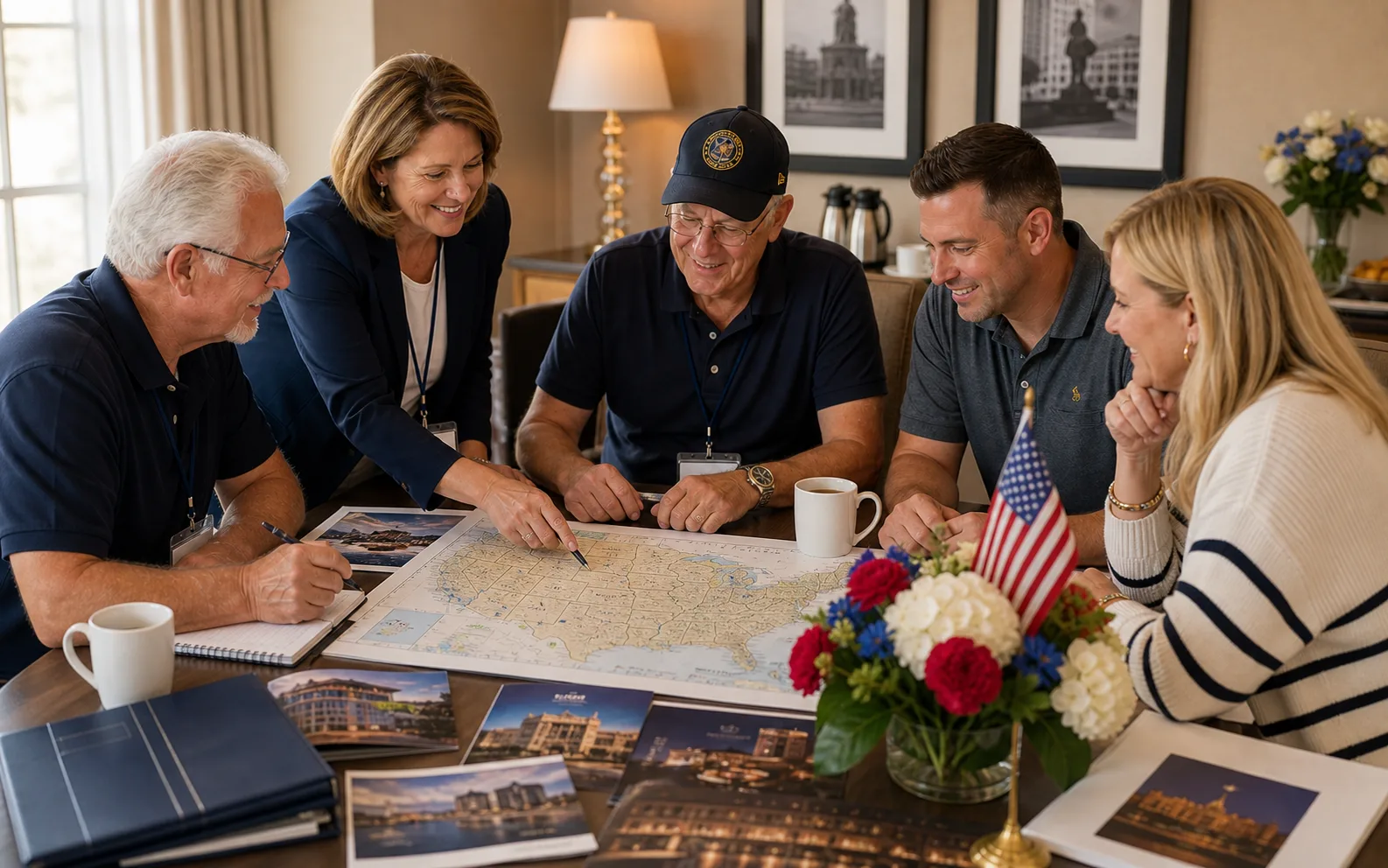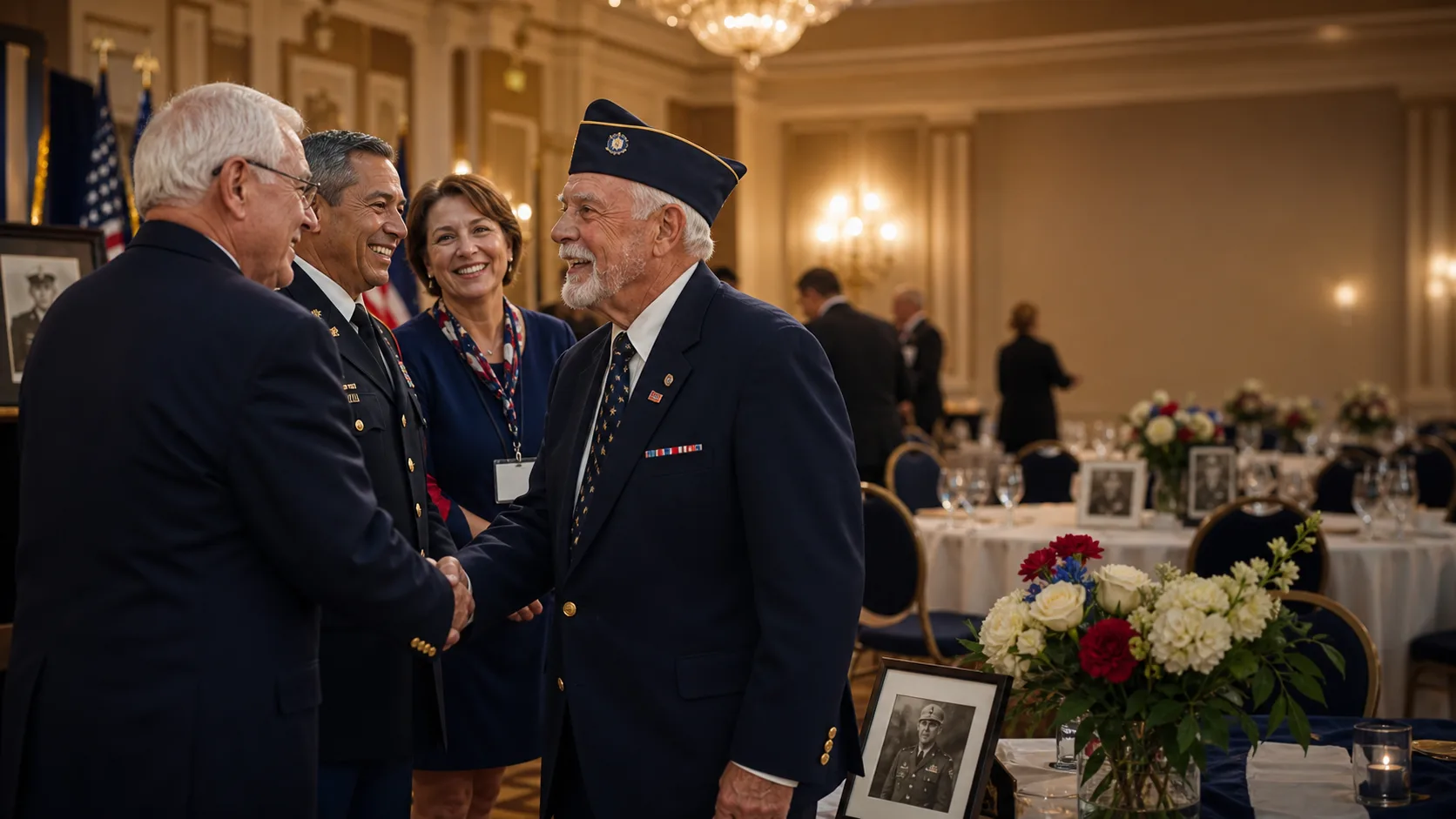
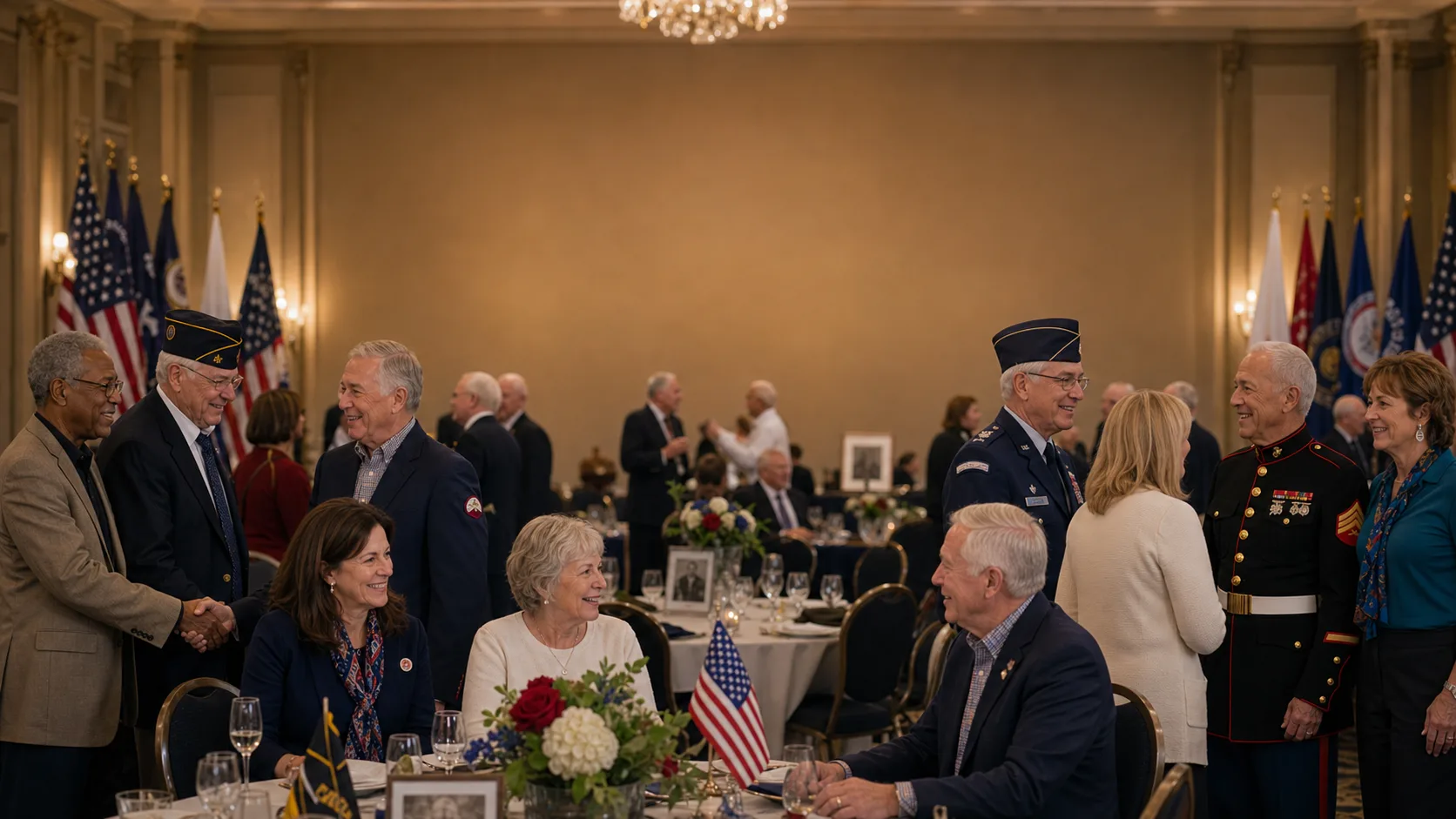
A reunion program carries memory, but it also creates new memories. The most welcoming events make space for Veterans, partners, caregivers, children, and friends without losing the character of the group.
Begin with the purpose
Ask the committee what members should feel when the weekend ends. Pride, comfort, renewed connection, and remembrance are useful guideposts. Every activity should support at least one of them.
Protect time for conversation
Avoid scheduling every hour. Build generous breaks around meals and tours, provide a comfortable hospitality room, and create small displays that naturally invite stories.
Make remembrance personal
A memorial service can be dignified without being elaborate. Read names carefully, invite a chaplain or group member to offer words, and tell families in advance how their loved ones will be honored.
Invite more than one voice
Pair a formal speaker with short member stories. Consider recording oral histories or setting out prompt cards such as “a moment I will never forget” and “the person who always made us laugh.”
Design for access
Confirm seating, mobility routes, hearing support, dietary needs, and transportation. Clear printed schedules and visible volunteers reduce uncertainty for everyone.
Tradition gives a reunion its identity. Thoughtful flexibility makes that tradition available to every generation gathered in the room.